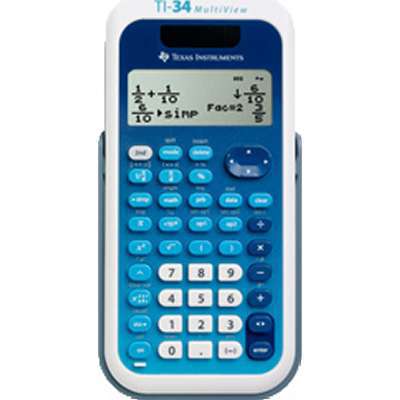
TI-34 Multi View Calculator is a scientific calculator featuring a multiview display and advanced scientific functions, suitable for complex calculations.
The TI-34 is praised for its advanced scientific functions and multiview display, making it suitable for complex scientific calculations. However, it may require more time to learn for new users, and concerns about cost are noted.
REASONS TO BUY
Advanced scientific functions - It supports a wide range of scientific operations.
Multiview display - It allows users to see multiple lines of calculations at once.
Educational value - It is designed specifically for teaching advanced scientific concepts.
CONSIDERATIONS
Steeper learning curve - The advanced features can be overwhelming for beginners.
Limited graphing capabilities - It does not support advanced graphing like some other models.
Review and edit previous entries via a scrollable home screen
Paste inputs or outputs into new calculations
MathPrint™ feature mode for input in math notation, including?, square roots, fractions, percents and exponents plus math notation output for fractions
CLASSIC mode for similar entry and compatibility with previous two-line scientific models like the TI- 34IIExplorer™ Plus scientific calculator
?symbol on input, some calculations in terms of pi and pi to the maximum decimal places of the calculator
Toggle key to change the form of answers between fraction and decimal, or between ? terms and decimal
Fraction/decimal/ percent conversions
Change between improper fractions and mixed numbers, plus a mode setting for mixed number or improper fraction output as the default
Simplification of fractions feature to simplify a fraction one factor at a time instead of automatically simplifying to lowest terms
Integer division denotes quotient and remainder
Random number and random integer generator
MODE menu for selecting calculator mode settings
Menu settings
Functions accessed directly through keys or through vertical menus
Negation key
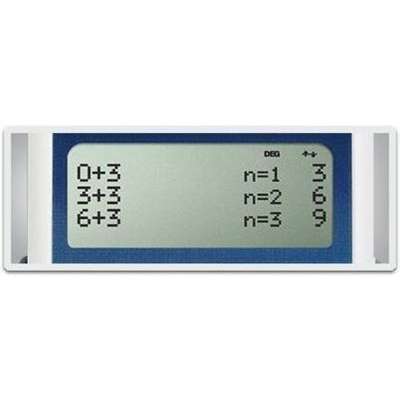
Two constant operation features for exploring mathematical patterns
Combinations and permutations
Trigonometry functions including sin, cos, tan, inverse sin, inverse cos and inverse tan
 9.0
9.0



 Shop with confidence! Provantage is an authorized Texas Instruments TI dealer.